Scheduled Nothing: The Radical Calendar Block That's Quietly Saving Creators' Brains
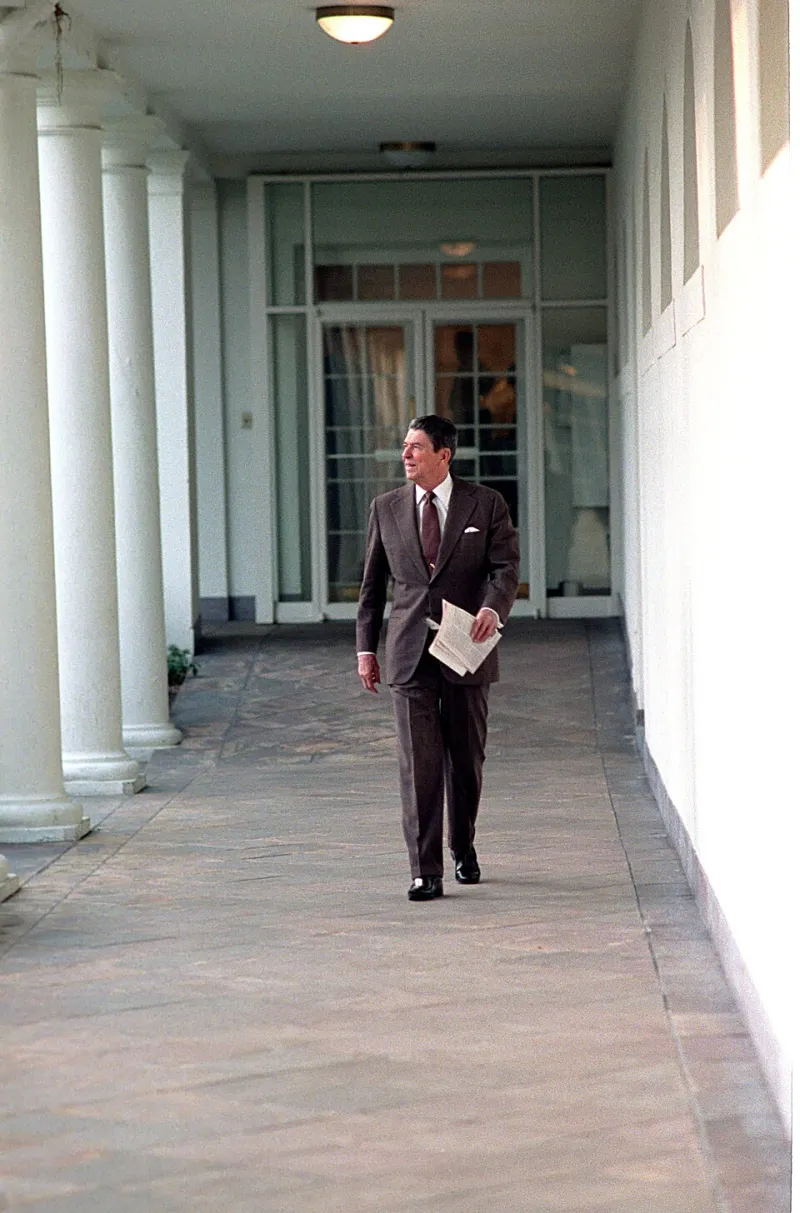
Photo: President (1981-1989 : Reagan). White House Photographic Office. 1981-1989, Public domain, via Wikimedia Commons
Open any creator productivity thread and you'll find the same gospel: batch your content, time-block your day, monetize your commute. Every waking hour is a content opportunity, and if you're not capturing, you're leaking.
Cool theory. Terrible biology.
Because here's what actually happens when a human brain never gets an unscheduled minute: it stops producing anything worth scheduling. The ideas get thinner. The takes get recycled. The content starts tasting like content. You've optimized yourself into a content mill running on sawdust.
The fix isn't another productivity system. It's the opposite. It's putting nothing on the calendar — on purpose, with a name on it.
What 'Scheduled Nothing' Actually Looks Like
I'm not talking about a vague intention to relax more. That never survives contact with a notification badge. I'm talking about boredom as a booked commitment — a recurring block, treated with the same respect as a brand call.
The rules are simple and annoyingly strict:
- It goes on the calendar. Named, visible, non-negotiable. "White space," "thinking time," "walk with no phone" — the label doesn't matter. The visibility does.
- No input allowed. No podcasts, no scrolling, no audiobooks. This is the part everyone cheats on. The whole mechanism requires your brain to be under-stimulated enough that it starts generating its own material.
- No output required. You're not allowed to turn the walk into a vlog or the people-watching into a thread. The moment you're "capturing," you've left the white space and re-entered production.
That third rule is where most creators flinch. If it's not content, why do it? Because the ideas it produces later are the ones that don't sound like everyone else's. You cannot out-hustle a well-rested perspective.
The Science Is Boringly Clear
Neuroscientists have been saying this for years: the brain's default mode network — the thing that lights up when you're doing nothing — is where memory consolidation, self-reflection, and creative connection happen. Every great shower thought is a default mode network receipt.
The creator economy, meanwhile, is built on the assumption that input equals output. Fill every gap, produce every day. It works exactly as well as you'd expect — which is why half your feed feels like the same three observations wearing different fonts.
A One-Week Starter Framework
If your calendar looks like a Tetris board, don't overhaul everything. Start here:
- Two white space blocks, minimum 45 minutes, per week. One for a phone-free walk. One for doing a specific nothing: sitting somewhere with people, staring out a window, cooking without filming it.
- A parking lot, not a camera. Keep a notes file for whatever surfaces during the block — but no posting, no drafting, no "quick b-roll." Write the phrase, close the phone.
- One audit question on Friday: What did I think this week that I couldn't have gotten from my feed? If the answer is nothing, your white space is being colonized. Tighten rule two.
- Protect it like it's paid. Because functionally, it is. It's the R&D department of a one-person media company.
The Momentum Myth
The fear, always, is momentum. Skip two posting days and the algorithm will forget you exist, your audience will evaporate, the whole thing collapses. This fear is mostly fiction. Audiences are remarkably tolerant of a slightly slower cadence from someone whose work is actually interesting. What they can't tolerate is more volume of the same.
The creators with real longevity — the ones still here after every trend cycle has washed through — almost all have some version of this. The off-season. The quiet month. The walk they take without you.
Boredom isn't the enemy of the content calendar. It's the reason there's anything worth putting on it.