The Mystery Tax: What Top Creators Quietly Refuse to Show You
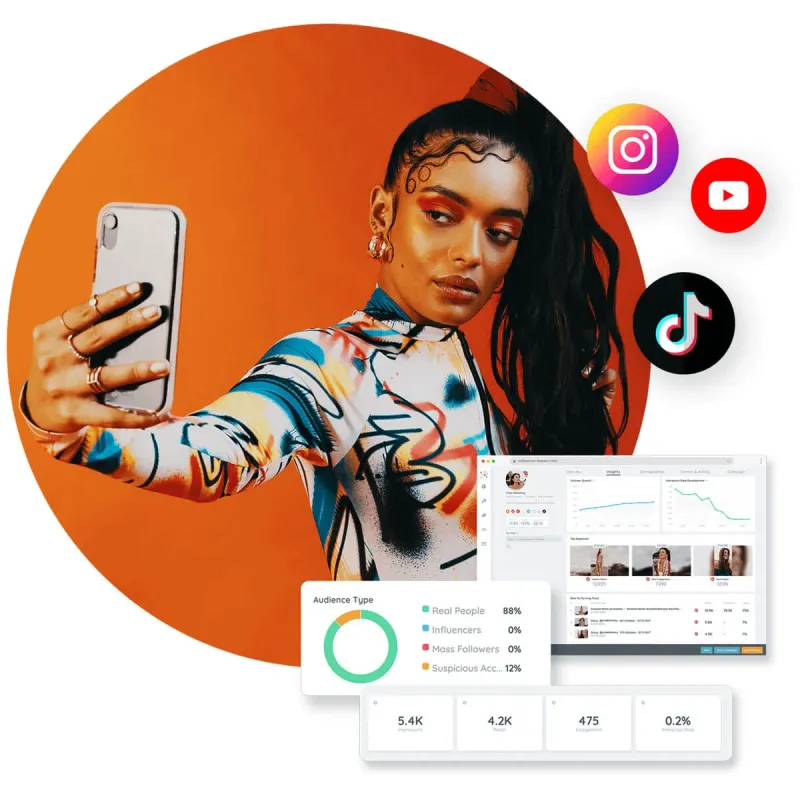
Photo: influencer filming themselves with phone ring light moody lighting, via engagemedia.com
There's a moment every creator eventually hits. You've shared the breakup, the therapy journey, the apartment tour, the 3 a.m. spiral. Your audience feels like family. And then one day you post something small — a random opinion, a blurry photo from a bad night — and the comments hit different. Not mean, exactly. Just… entitled. Like they'd earned access you never meant to give.
That's the moment you learn the internet's least discussed rule: sharing is currency, but it comes with a mystery tax. Pay too little and nobody trusts you. Pay too much and there's nothing left to be curious about.
The Myth of Total Transparency
We've spent a decade marinating in "authenticity" culture. Show the mess. Post the ugly cry. Monetize the vulnerability. And sure, it worked — for a while. The first wave of creators who pulled back the curtain got rewarded handsomely for it.
But somewhere along the way, transparency became a performance with its own uniform. The casual cry-laughing selfie. The "I almost didn't post this" caption. Everyone's being raw in exactly the same way, which is to say: not really.
The creators who've lasted longest — think of the podcasters who never show their partners, the YouTubers who've never confirmed where they live, the TikTokers who built entire empires on a faceless voice — figured out something counterintuitive. The audience doesn't actually want everything. They want the feeling of everything, minus the exhaustion of actually holding it.
Three Lines Creators Draw in the Dark
Talk to enough people building personal brands and you start hearing the same private rules repeated like folklore.
The partner line. A huge number of mid-size and top-tier creators have a hard rule: their significant other is either fully in or fully out, no half-appearances. The half-in couples are the ones whose comment sections turn into detective boards.
The money line. Revenue screenshots build clout until the day they build resentment. Plenty of creators learned that posting exact earnings made every future product launch feel like a shakedown. The ones still thriving talk about money in ranges, lessons, and stories — never running totals.
The family line. Kids' faces, parents' health, sibling drama. The creators who post their children daily are making an edit on behalf of someone who can't consent yet. Increasingly, the ones getting respect are the ones who show the experience of family without showing the people.
What's interesting is that none of these lines are about privacy as an abstract virtue. They're strategic. Every hidden thing is a pressure valve — a place the audience's imagination can live so it doesn't start demanding the real thing.
Scarcity Is a Feature, Not a Flaw
Here's the uncomfortable economics of it: attention attaches to gaps. A creator who shares 100% of their life gives followers nothing to wonder about, and wondering is what turns a viewer into a fan. The mystery isn't withholding — it's world-building.
Think about the creators you'd defend in a group chat. I'd bet money there's at least one thing about them you don't know and actively want to. That ache is the product.
Meanwhile, the overexposed creator has a different problem: their audience has seen every room in the house, so when something genuinely big happens — a real crisis, a real reinvention — it lands with the same weight as the last twelve manufactured ones. The boy who cried vulnerability.
So How Much Is Too Much?
A decent gut check: if you'd be uncomfortable explaining the post to a future employer, a future kid, or the person it's secretly about — that's not transparency, that's a leak. Real transparency is chosen. Leaks just feel that way.
Another one: share the lesson, not the wound in real time. The best vulnerable content is almost always retrospective. Processing publicly is compelling. Bleeding publicly is just grim, and it ages badly for everyone involved.
And maybe the most useful reframe: you're not hiding parts of yourself. You're curating a character with range. Even the most "real" creators online are playing a version of themselves — the trick is making sure that version has somewhere left to go.
The tightrope never gets easier. But the creators who walk it well all seem to know the same secret: the audience doesn't stay for what you show them. They stay for what they're still hoping to see.