Rough Drafts Hit Different: Why Your In-Between Era Is the Most Interesting Thing About You
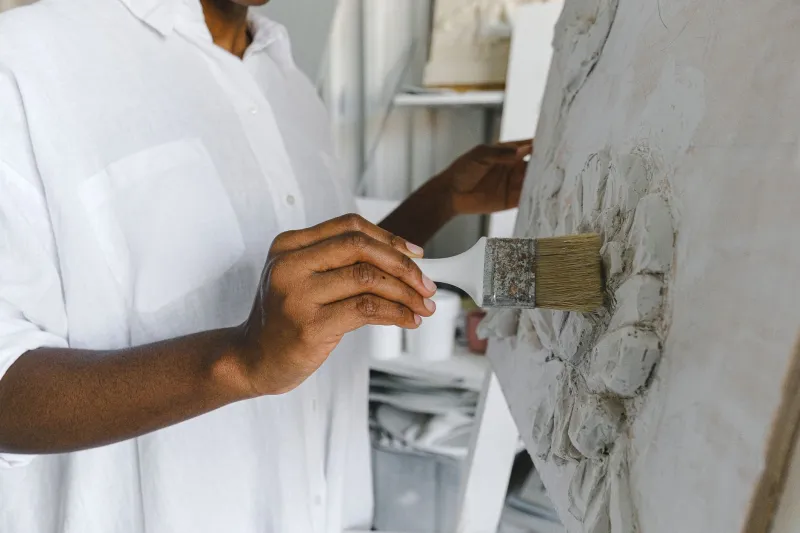
There's this weird pressure that lives rent-free in every creator's head — the idea that you shouldn't show your work until it's done. Until it's tight, polished, color-corrected, and ready to hang in a gallery. Until you've figured out the ending before you share the beginning.
But here's the thing nobody's saying loud enough: the ending is boring. The middle is where everyone's actually paying attention.
The Myth of the 'Final Form'
We've been sold this idea that creative work has a destination — some finished, fully-realized version of yourself or your art that you're building toward. And sure, goals are real. Progress is real. But the belief that you need to arrive somewhere before your story becomes worth telling? That's a lie dressed up as professionalism.
Some of the most-watched, most-shared, most-talked-about content on the internet right now isn't polished. It's the artist posting a half-finished canvas at midnight with a voice note explaining why they hate it. It's the musician dropping a voice memo of a song that doesn't have a chorus yet. It's the small brand founder going live from their kitchen table to talk about the pivot they didn't plan for.
Audiences aren't just consuming the work — they're consuming the becoming. And that's a completely different product.
Why Imperfection Actually Builds Trust
Here's the psychology behind it: when someone shows you their mess, they're extending trust. They're saying, I'm not performing for you right now — I'm just here. And that kind of vulnerability is magnetic in a media landscape that's absolutely drowning in curated highlight reels.
Think about how Simone Biles handled her withdrawal from the Tokyo Olympics. She didn't disappear until she had a comeback arc ready. She stayed visible, talked openly about her mental health in real time, and let people watch her work through something hard and unresolved. The response wasn't pity — it was a deeper level of connection than any gold medal moment could have created on its own.
Or look at how brands like Glossier built entire identities around the in-process aesthetic. Early Glossier was intentionally incomplete-feeling — the packaging was minimal, the campaigns were shot like someone's older sister took them, the whole vibe was we're figuring this out together. That wasn't an accident. That was a strategy built on the radical idea that imperfection is relatable, and relatable is profitable.
The Failed Experiment Is the Content
One of the biggest shifts happening in creator culture right now is the rise of what you might call the "failure post" — and it's not the cringe-y, overly produced "I tried this and it didn't work, here's my lesson" format that felt performative circa 2019. This is rawer than that.
It's the baker who posts the cake that completely collapsed and just says, yeah, this happened. It's the filmmaker who shares the cut that didn't land and talks through why in the comments. It's the copywriter who posts the pitch deck that got rejected — redactions and all.
These posts perform. Not because audiences love watching people fail, but because failure is honest, and honesty is scarce. When you show a failed experiment, you're proving that you're actually experimenting — that you're not just recycling what's already been proven to work. That risk-taking reads as creative integrity, and people respect it.
Your Uncertainty Is a Feature, Not a Bug
There's also something worth naming about the specific kind of content that comes from not knowing what comes next. When you're in the middle of something — a creative pivot, a rebrand, a personal reinvention — your perspective is genuinely alive. You're processing in real time. You're asking questions you don't have answers to yet.
That energy is impossible to fake. And it's impossible to recreate once you've landed on the other side.
Some creators have figured this out and built entire audiences around the uncertainty itself. They don't wait until they've made the decision to talk about it — they bring their audience into the decision-making process. They share the options they're weighing, the fears attached to each one, the random 2 a.m. thought that's making them second-guess everything. And their audiences show up hard for that, because it feels like being trusted with something real.
How to Actually Lean Into Your Messy Middle
This isn't a call to manufacture chaos for content. Performing messiness is just as hollow as performing perfection — audiences can smell the difference. But if you're genuinely in an in-between place right now, here are a few ways to let that era work for you instead of feeling like something you need to hide:
Document before you edit. Before you clean up the idea, capture it raw. Voice memos, quick videos, unfiltered notes — these become the source material for content that feels alive because it is alive.
Name the uncertainty out loud. You don't have to have the answer to start the conversation. "I don't know where this is going yet" is a more compelling opener than most polished hooks.
Share the question, not just the answer. What are you wrestling with creatively or professionally right now? That question, shared openly, invites your audience into a dialogue rather than a lecture.
Let iterations be visible. Post the version one and the version three. Let people see the gap. That gap is where your process lives, and your process is one of the most interesting things about you.
The Glow-Up Isn't at the End — It's the Whole Ride
We spend so much energy waiting for the moment when everything clicks — when the vision is fully realized, when the brand is locked in, when we finally feel like we know what we're doing. But the audiences who are going to stick around for the long haul? They're not waiting for your finished form. They're here for the whole journey.
The messy middle isn't a phase to get through. It's actually one of the most creative, most generative, most interesting places you can be. And the sooner you start treating it that way — instead of hiding it until you've figured out the ending — the sooner your content starts doing something that polished work almost never can.
It starts feeling like a real person made it.
And that, right now, is the rarest thing on the internet.