Maximalism Is Having a Moment — And Gen Z Is Here for Every Chaotic, Beautiful Second of It
Somewhere between the fifth "clean girl aesthetic" tutorial and the millionth Pinterest board full of white linen and neutral tones, a generation collectively decided: enough.
Gen Z didn't just quietly step back from minimalism. They threw open the closet doors, layered three prints on top of each other, hung seventeen plants from the ceiling, painted their walls a color that has no business existing, and said — loudly, proudly, defiantly — this is me.
And honestly? It's one of the most interesting cultural pivots we've seen in years.
The Beige Fatigue Is Real
Let's be honest about what minimalism became. What started as a genuinely interesting design and lifestyle philosophy — rooted in intentionality, anti-consumerism, and a rejection of excess — slowly transformed into its own kind of aspirational aesthetic. The "less is more" crowd ended up with $400 linen throw pillows and $80 ceramic soap dispensers. It was still consumption. It was just beige consumption.
And the algorithm loved it. For a stretch of time, the most viral home content, the most-shared fashion posts, the most-saved lifestyle photos all had a very specific visual language: muted, calm, cohesive, expensive-looking-but-not-trying. Quiet luxury. Old money. "No-makeup makeup."
The problem is that when everyone's aesthetic is the same kind of understated, the whole thing stops being personal and starts being performative in a different way. You're not expressing yourself — you're performing restraint. And for a generation that grew up in economic uncertainty, a pandemic, and the absolute sensory overload of social media, performing restraint started to feel... exhausting. And kind of dishonest.
Enter the Chaos, Stage Left
The maximalist wave that's been building on TikTok and Instagram over the past couple of years isn't just about wearing more colors or buying more stuff. It's a statement. It's a deliberate rejection of the idea that good taste has to look a certain way — that sophistication requires restraint.
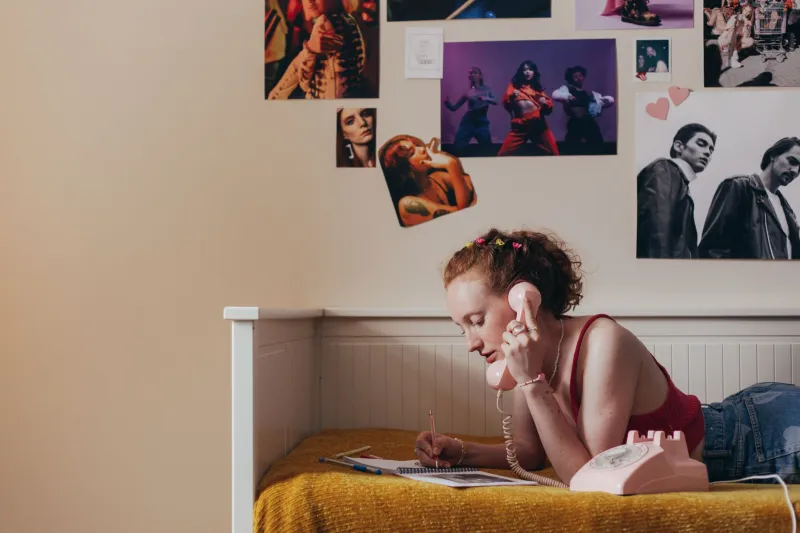
Scroll through the "maximalist room" or "cluttercore" tags and you'll find something genuinely joyful. Walls covered in vintage posters, framed photos, string lights, and hand-painted murals. Outfits that combine plaid with floral with leopard print and somehow — somehow — work. Thrift store hauls that get reimagined into something completely singular. DIY projects that turn a $12 IKEA frame into a statement piece with some paint and a hot glue gun.
This isn't careless. This is creative. There's a huge difference.
Thrift Culture as Artistic Practice
One of the most compelling parts of the maximalist movement is how deeply it's tied to thrifting and DIY culture. And this isn't accidental.
Gen Z has grown up with a complicated relationship to fast fashion — aware of its environmental and human cost in a way that previous generations simply weren't, at least not at the same scale. Thrift stores, depop, Poshmark, and local vintage shops offer a way to build a maximalist wardrobe without the guilt of buying new cheap clothing. Every piece has a history. Every find is a little treasure hunt.
But more than just the environmental angle, thrifting is fundamentally anti-algorithmic in the best way. You can't curate a thrift store find. You can't make it look like everyone else's, because it's genuinely one-of-a-kind. When a 22-year-old in Portland shows up to a party in a vintage 1980s blazer she found for $8, a hand-beaded bag she bought on Depop, and boots she painted herself — that outfit literally cannot be replicated. It's hers.
That's the real luxury in 2024. Uniqueness. Not the price tag.
The Mental Health Angle Nobody's Talking About Enough
Here's where it gets genuinely interesting from a psychological standpoint. There's growing conversation in mental health spaces about the relationship between self-expression and wellbeing — and specifically about what happens when people feel forced to suppress or minimize their personality to fit an aesthetic ideal.
The minimalist aesthetic, whatever its original intentions, carried an implicit message: less of you is better. Tidy it up. Tone it down. Keep it neutral.
Maximalism says the opposite. It says: all of you is welcome here.
For a generation dealing with historically high rates of anxiety, depression, and identity-related stress — much of it amplified by social media comparison — there's something genuinely therapeutic about a design philosophy that says your space, your body, your aesthetic can hold everything you are without needing to be edited down.
A cluttered, colorful, deeply personal bedroom isn't a sign of chaos. For a lot of young people, it's a sign of safety. It's a physical space that reflects them back to themselves, fully and without apology.
DIY as Rebellion
The DIY component of this movement deserves its own moment in the spotlight, because it's doing something pretty radical. In a consumer culture that constantly tells you to buy the finished product — the pre-styled room, the pre-curated wardrobe, the pre-packaged aesthetic — making things yourself is a genuine act of resistance.
And Gen Z is making things. Crocheting their own bags. Painting their own jeans. Sewing patches onto thrifted denim jackets. Repainting furniture. Building shelving units out of reclaimed wood. Pressing flowers and making art from them. Dyeing fabric.
These aren't just hobbies. They're a reclaiming of creative agency in a world that increasingly wants to sell you someone else's vision of who you should be.
There's something deeply aligned with the "creating louder" ethos here — the idea that expression doesn't require permission, a platform, or a big budget. It just requires doing the thing.
The Algorithm's Worst Nightmare (In the Best Way)
Here's a fun irony: maximalism is, in some ways, the aesthetic that the algorithm can't fully digest. Algorithmic recommendation systems love clean, identifiable patterns — a consistent color palette, a recognizable vibe, a predictable content type. The whole "niche down and stay consistent" advice that gets handed out to creators is essentially an algorithm-optimization strategy.
Maximalism breaks all of that. It's hard to categorize. It's hard to replicate. It resists the kind of flattening that makes content easy to sort and serve.
And yet it's spreading anyway, because it's interesting. Because when you scroll past the fifteenth neutral apartment and suddenly land on someone's bedroom that looks like a fever dream collaboration between a Victorian curiosity cabinet and a 90s teen magazine, you stop. You look. You feel something.
That's the power of living loud. Not everyone will love it. But the people who do will really love it.
More Isn't Always Too Much
Look, minimalism isn't going anywhere. There are people for whom a clean, quiet, carefully curated environment is genuinely how they thrive — and that's completely valid. Aesthetic preferences aren't a moral hierarchy.
But the cultural shift toward maximalism, DIY expression, and deliberately bold personal style is telling us something important about where we are as a society. After years of being told to optimize, streamline, and present only the most polished version of ourselves — to audiences, to algorithms, to potential employers — a lot of people are just... done with that.
They want to take up space. They want their homes and their wardrobes and their social media feeds to look like them — messy and layered and full of contradictions and references and things that make them happy.
That's not a trend. That's a generation figuring out who they are, loudly and on their own terms.
And honestly? We're here for every chaotic, beautiful second of it.